Yellow Chords & Guitar Lesson (Most Accurate)
Have you ever gone to great lengths for someone in love?
You made sacrifices and did what you thought was the “right thing”.
This may sound like a great idea… until they don’t reciprocate. Then, it can end in utter tragedy. But today, I want to share with you a song about that.
Now, all the other lessons online are missing this one little trick I am going to show you that makes all the difference.
So grab your axe, and let’s dive into this “Yellow” chords and guitar lesson!
Who Wrote Yellow?
"Yellow" was written by Chris Martin, Jonny Buckland, Guy Berryman, and Will Champion– all four members of the British rock band Coldplay. It’s one of their most iconic songs that first appeared on their debut album, Parachutes, released in 2000.
It was co-produced with British record producer Ken Nelson.
Apparently the song’s inception began one evening during a recording session at Rockfield Studios in Wales. The band had just finished the track "Shiver," and took a break outside. Chris Martin was gazing up at the stars and came up with the opening line, "Look at the stars." The title "Yellow" came when he glanced at a Yellow Pages directory nearby and decided on the word "Yellow" for the song.
If you ask me, I think that is pretty random. But sure enough, it evolved into a heartfelt expression of unrequited love and devotion. The lyrics sing of someone demonstrating love, commitment, and the willingness to go to great lengths for someone.
Upon its release on June 26, 2000, "Yellow" achieved significant commercial success. It reached number four on the UK Singles Chart, marking Coldplay's first top-five hit in the United Kingdom. Internationally, the song topped the charts in Iceland, reached number five in Australia, and secured the ninth spot in Ireland. In the United States, it peaked at number 48.
The song's popularity was spread by its extensive radio play and use in various promotional materials, propelling Coldplay into the global spotlight. "Yellow" has since been covered by numerous artists worldwide and remains one of the band's most beloved tracks.
Now, you may be wondering…
What is the tuning for Yellow?
The tuning for "Yellow," as recorded by Coldplay, is in a strange tuning. The electric guitars are in standard tuning.
Here are the strings:
- E (6th string, lowest pitch)
- A (5th string)
- D (4th string)
- G (3rd string)
- B (2nd string)
- E (1st string, highest pitch)
However, the main acoustic guitar part re-tunes 2 strings like this:
- E (6th string, lowest pitch)
- A (5th string)
- B (4th string)
- G (3rd string)
- B (2nd string)
- Eb/D# (1st string, highest pitch)
Most people only grab the high E string being tuned down. And that’s close, but if you want to sound like the record, you’ll need to also tune down the 4th string to a low B.
All right!
Now that you know the “Yellow” tuning, let’s next talk about the…
Yellow Chords
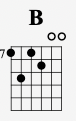
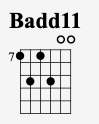
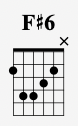
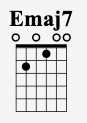
To play “Yellow” you only need to know 6 main chords they are B, Badd11, F#6, Emaj7, G#m and F#m11. Let’s take a look at a few ways these chords can be played on the fretboard.
B is played with a slight bar done with the index finger, while still keeping the treble strings open like this:
Badd11 is a slight shift by adding down the pinky like this:
F#6 is a thumb chord and here we are going to mute the 1st string like so:
Emaj7 looks like an E dominant seven (for my blues guitar players out there):
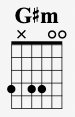
G#m is a blend of fretting notes, open strings, and muted strings like this:
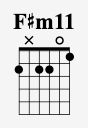
Finally, we have hands down my favorite chord in the whole song and that is F#m11 playing like this:
If you’ve struggled to understand the fretboard for RHYTHM and LEAD guitar and want to discover the easiest and fastest way. Then get your hands on my free Fretboard Guide PDF right here now:
Is Yellow hard to play on guitar?
I would say “Yellow” requires a solid intermediate skill level to play. There are many tricky parts to navigate, like using the bar technique, alternate tunings, and even thumb chords. So, take your time.
What key is Yellow in?
“Yellow” as recorded Coldplay, is in the key of B major. The B major scale uses the notes: B – C♯ – D♯ – E – F♯ – G♯ – A♯ – B.
All of the chords fit the diatonic scale of B major except one: F#m11. Here’s a quick look at how they all relate:
1. B major
Notes: B – D♯ – F♯
Function: I chord (Tonic)
- B is the root of the key.
- D♯ is the major third.
- F♯ is the perfect fifth.
- This is the tonal center — the most stable, resolved chord in the key of B major.
2. Badd11
Notes: B – D♯ – F♯ – E
Function: I(add11) chord
- It starts with a basic B major triad.
- The added E (11th) creates a suspended, slightly ambiguous sound.
- It’s not a traditional diatonic chord, but it adds color and a modern pop/rock texture while still functioning as the tonic.
3. F♯6
Notes: F♯ – A♯ – C♯ – D♯
Function: V6 chord (Dominant with a 6th)
- F♯ is the fifth degree of the B major scale.
- A♯ is the major third of F♯.
- C♯ is the perfect fifth.
- D♯ is the added 6th.
- This chord functions as a dominant, but the added 6th softens the tension, giving it a jazzy or soulful flavor.
4. Emaj7
Notes: E – G♯ – B – D♯
Function: IVmaj7 chord (Subdominant major seventh)
- E is the fourth degree of B major.
- G♯ is the major third.
- B is the fifth.
- D♯ is the major 7th.
- This chord adds a lush, dreamy quality while moving away from the tonic.
5. G♯m
Notes: G♯ – B – D♯
Function: vi chord (submediant)
- G♯ is the sixth degree of the B major scale.
- B is the minor third.
- D♯ is the perfect fifth.
- This is the relative minor of the key. It shares all the same notes as B major but starts from the 6th degree. It adds a mellow, introspective quality and often appears in emotional or reflective moments in a progression.
6. F♯m11
Notes: F♯ – A – C♯ – E – B
Function: Borrowed chord — not diatonic
- F♯m is not in the key of B major (F♯ major is).
- The m11 voicing adds A (minor third), E (minor seventh), and B (11th).
- This chord is borrowed from the parallel key of B minor. It gives a moody vibe to the progression.
So that’s the theory. Next, let’s look at…
What is the strumming pattern for Yellow?
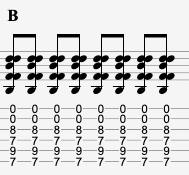
The main underlying feel for “Yellow” is 8th-note rock. In 4/4 time, 8th notes divide each beat into two equal parts, creating a driving, steady rhythm like this:
1 & 2 & 3 & 4 &
The numbers (1, 2, 3, 4) represent the main beats in the measure, while the "&" represents the offbeats that add energy and momentum.
When counted out loud, it sounds like:
"One-and, Two-and, Three-and, Four-and."
This gives a strong and consistent forward motion to the tune. Here’s an example of a strumming pattern in the style of “Yellow”:
Conclusion
Bottom line, “Yellow” is a beautiful song about unrequited love. Despite its lyrical theme, many fans consider it to be an upbeat track, although it is often interpreted as melancholy as well.
Keep practicing, and if you want to learn songs way faster, better understand the fretboard, and not waste years spinning your wheels with guitar, grab my free fretboard guide here right now:
Jon MacLennan
Like this blog post? Get Jon’s best guitar lessons straight to your inbox.
Discover the 5 easiest and fastest ways to play the blues scale anywhere on the neck with this FREE PDF GUIDE
