Best "After Midnight" Chords & Guitar Lesson
J.J. Cale sang:
===
After midnight… We're gonna let it all hang out.
===
It’s true.
Below, I’m going to break down the guitar style behind this classic song. It’s also been covered by a ton of legendary guitarists as well, like Eric Clapton and Chet Atkins.
So grab your axe, and let’s dive into this “After Midnight” chords and guitar lesson!
Who Wrote After Midnight?
“After Midnight” was written by American singer-songwriter J.J. Cale. The song’s laid-back groove helped form the foundation for what would later become known as the “Tulsa Sound."
J.J. Cale originally recorded “After Midnight” in 1966, releasing it as the B-side to his single “Slow Motion.” At the time, Cale was working as a studio engineer in Los Angeles, having moved from Tulsa, Oklahoma. But the track never took off.
It wasn’t until 1970 when Eric Clapton covered it on his self-titled debut solo album that the track and J.J. Cale’s writing were brought to a broader audience.
Clapton was introduced ...
How To Mute Strings On Guitar Like A Pro
Let's talk about one of the most important techniques to master as a guitarist.
In fact, this one thing can make a huge difference in whether your playing sounds like an amateur or a pro. And, this applies to everything you play. Whether that’s strumming along to a song, or ripping a solo.
What’s the technique?
Well, it’s something every player should know and that’s how to mute strings on guitar.
So, let’s get into the first point and that’s understanding:
1) Strum hand muting
(Demonstrate a G major scale)
When a player plays without proper strum hand muting, they will get all kinds of unwanted noise. In my years of teaching, I’ve noticed many students aren’t even aware this is happening.
So first start by taking stock and listening to your sound.
On acoustic this can be tougher to hear. Sometimes players won’t realize it’s happening. Their playing sounds unclean. If they switch to electric guitar, and crank up the volume, that’s often when things sticks out. The unwa...
The ULTIMATE Use Me Chords & Guitar Lesson
Behold… an epic track featuring LA funk royalty!
Below, I want to share some insider tips on how to play guitar in the style used on one of Bill Withers’ most iconic hits.
This tune only uses 2 chords…
But it’s deep…
And “in the pocket”...
So grab your axe, and let’s dive into this “Use Me” chords and guitar lesson!
Who Wrote Use Me?
“Use Me” was written by the legendary American singer-songwriter Bill Withers in 1972. It was released as the second single from his album Still Bill and became one of his biggest hits, reaching No. 2 on both the Billboard Hot 100 and the R&B charts.
The first single from this album was “Lean On Me”.
“Use Me” lyrics are interesting. The song sings about complexities in a relationship where the narrator is aware he’s being taken advantage of. However, he chooses to stay because of the pleasure he’s getting from it.
The song was recorded at The Record Plant in Los Angeles and produced by Withers along with members of the Watts 103rd Street R...
The ULTIMATE Hound Dog Chords & Guitar Lesson
If you trace back the roots of rock and roll… you’ll wind up at the blues.
Below, I want to share with you a perfect example of this. Here’s a tune that became a huge hit for 2 different artists.
So grab your axe, and let’s dive into this “Hound Dog” chords and guitar lesson!
Who Wrote Hound Dog?
“Hound Dog” was written by Jerry Leiber and Mike Stoller – a legendary songwriting duo from New York. They were known for writing dozens of rock and R&B hits during the 1950s and 1960s.
They wrote “Hound Dog” in 1952 when they were still teenagers. At its core, it’s really a blues tune. The first person to record “Hound Dog” was Big Mama Thornton in August 1952. Her version is raw and more down-home.
Then, later in 1956, Elvis recorded it at RCA Studios in New York City.
Elvis’s version hit #1 on the Billboard pop chart, R&B chart, and country chart all at once. It stayed there for 11 weeks, which was a record at the time.
When Elvis’s version came out, Jerry Leiber reporte...
Swampy Midnight Special Chords & Guitar Lesson
I’m a sucker for 3 things in a song:
1) Lyrics about trains
2) Swampy guitar parts
3) THE BLUES
Below I want to share with you some insider guitar tips on a classic song that’s got all 3.
So grab your axe, and let’s dive into this “Midnight Special” chords and guitar lesson!
Who Wrote Midnight Special?
“Midnight Special” is a traditional American folk song that goes back for generations.
Its origins are deeply rooted in the oral traditions. However, the song's earliest documented lyrics appeared in 1905 as noted by sociologist Howard Odum.
But, these lines were common in many other African-American songs of that era and didn't specifically reference a train or light. The first printed reference to "Midnight Special" as a song was in a 1923 issue of Adventure magazine.
The "Midnight Special" refers to a passenger train, and in the song, its light symbolizes hope and freedom. Prisoners believed that if the train's light shone on them, it was a sign of impending release or...
Mannish Boy Chords & Guitar Lesson
One of my all-time favorite blues musicians is Muddy Waters.
This guy could sing, play, and lead a band like a boss. A great example of this is his tune “Mannish Boy”.
Ever heard it?
It starts off with this incredible call & response between Muddy’s voice and his guitar.
He sings:
===
Oh, yeah
(epic blues lick)
Oh, yeah
(epic blues lick)
Everything gonna be alright this mornin'
===
And so on and so forth.
The licks he plays are tasty, soulful, and the epitome of blues guitar. In the video above, I take a quick look at them. This song is a blues standard originally done by Muddy Waters but many other great artists have covered it as well.
Jon MacLennan
One Scale To Rule Them All
Years ago I was sitting in a music class with blues guitar grand puba Kenny Burrell…
He didn’t have his guitar with him that day. But he did have a grand piano in the room.
So he walked over to it and played the notes:
E
G
A
Bb
B
D
E
In that order, slowly, he hunted and pecked at the keys. (Kenny isn’t a piano player. But, he would often use the piano to demonstrate certain sounds he was talking about.)
He then looked up at the class and said, “Do you know what that is?”
The room was silent.
He said,
“That’s the blues scale.”
Then he paused and said,
“Do you have that worked out? All over your instrument?...
…because if not you’re going to want to do that.”
Decades later, I still remember this lesson. And as I became a more proficient musician. I’ve only seen MORE value in it.
You see, when I play lead guitar, in pretty much ANY style, I rely on knowing the blues scale on my instrument. The blues seems to always sneak its way into my soloing somewhere.
But whe...
10 Epic (Minor) Blues Guitar Chords Every Guitarist Should Know
If you want to play incredible lead and rhythm guitar… then you’re going to need to know chords.
Below I’m going to share 10 Epic (Minor) Blues Guitar Chords Every Guitarist Should Know.
So grab your 6-stringer and let’s dive in, starting with…
1. Open Em
In my humble (but accurate) opinion, this is one of the greatest guitar chords of all time.

For many players, it may have even been the first chord you ever learned. Yet it sounds so good – especially if you drag your pick from the treble to the bass strings like this: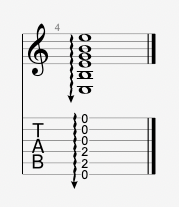
A great bluesy song that uses this Em is “I Put A Spell On You” as recorded by Creedence Clearwater Revival. The original was done by Screamin' Jay Hawkins, but it’s an AWESOME 16-bar blues:
2. Moveable Minor
This chord is the same basic idea as the open Em chord but it makes it moveable. This can be tough if players have not learned to play bar chords effortlessly yet. But once you get it down, it can open up a lot of doors.

You see this can now be played ...
3 Simple Ways To Play The 12 Bar Blues Progression
If you want to play any popular American music from the past 150 years… then you’re going to want to be familiar with the blues.
When you do this makes learning your favorite songs so much EASIER.
You’ll start to identify the fundamental patterns beneath the surface of the music. And you won’t feel like you have to start back at square one, every time you go to learn a new song. In this post, I want to share with you 3 simple ways to play the 12 bar blues progression.
These examples are going to be in the key of A major. However, the blues can be played in any key – major or minor. So let’s start with the…
12 Bar Blues Progression Chords
There are 3 main chords to a simple blues progression. These are called the I, IV, and V chords. The I, IV, and V chords are the most common chords in Western music and are essential for understanding harmony. They come from the major scale of a given key and are built on the 1st, 4th, and 5th notes (or degrees) of that scale.
In the key of ...
10 Must-Know Guitar Techniques For Beginners And Intermediates
If you want to improve as a guitarist, one of the most important areas to focus on is technique.
Techniques are the keys to being able to unlock the sounds created on your favorite recordings.
But if a player is lacking the skills or understanding of the techniques required. Then their music is going to come up short.
Below I share 10 must-know guitar techniques for beginner and intermediate players. These are in no particular order, and there are many more than what I list here. But let’s get started with…
1) Slides
Slides are a versatile and expressive technique that can add a smooth, fluid sound to your playing. They can be added to single-note lines, chords, or even the beginning and ends of phrases or solos.
However, a lot of guitarists feel like they don’t have enough strength to slide. They can’t glide up or down the neck without the note dying off. This can be tough and annoying.
2) Hammer-ons and Pull-offs
These are technically two different techniques. Howe...
Discover the 5 easiest and fastest ways to play the blues scale anywhere on the neck with this FREE PDF GUIDE
